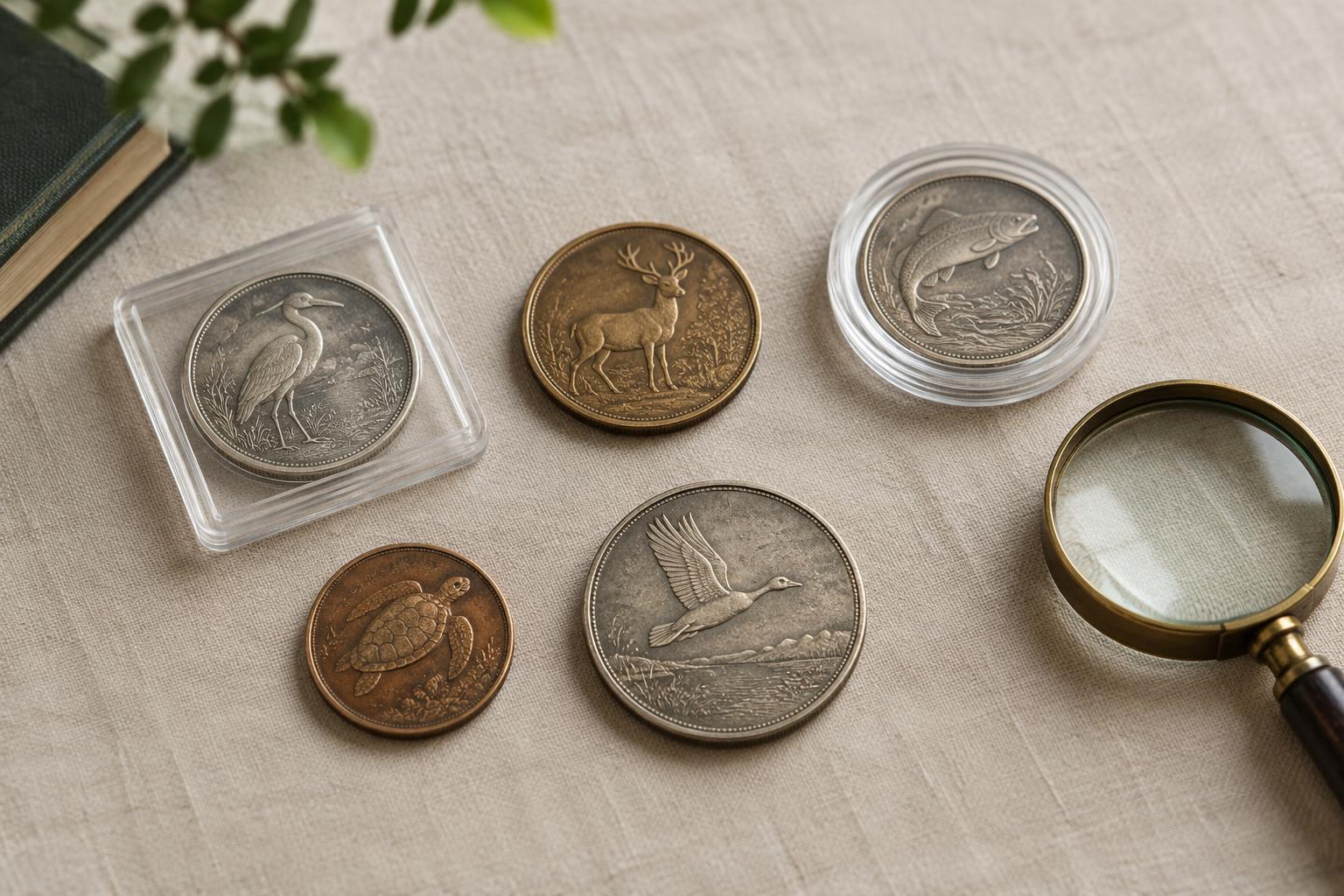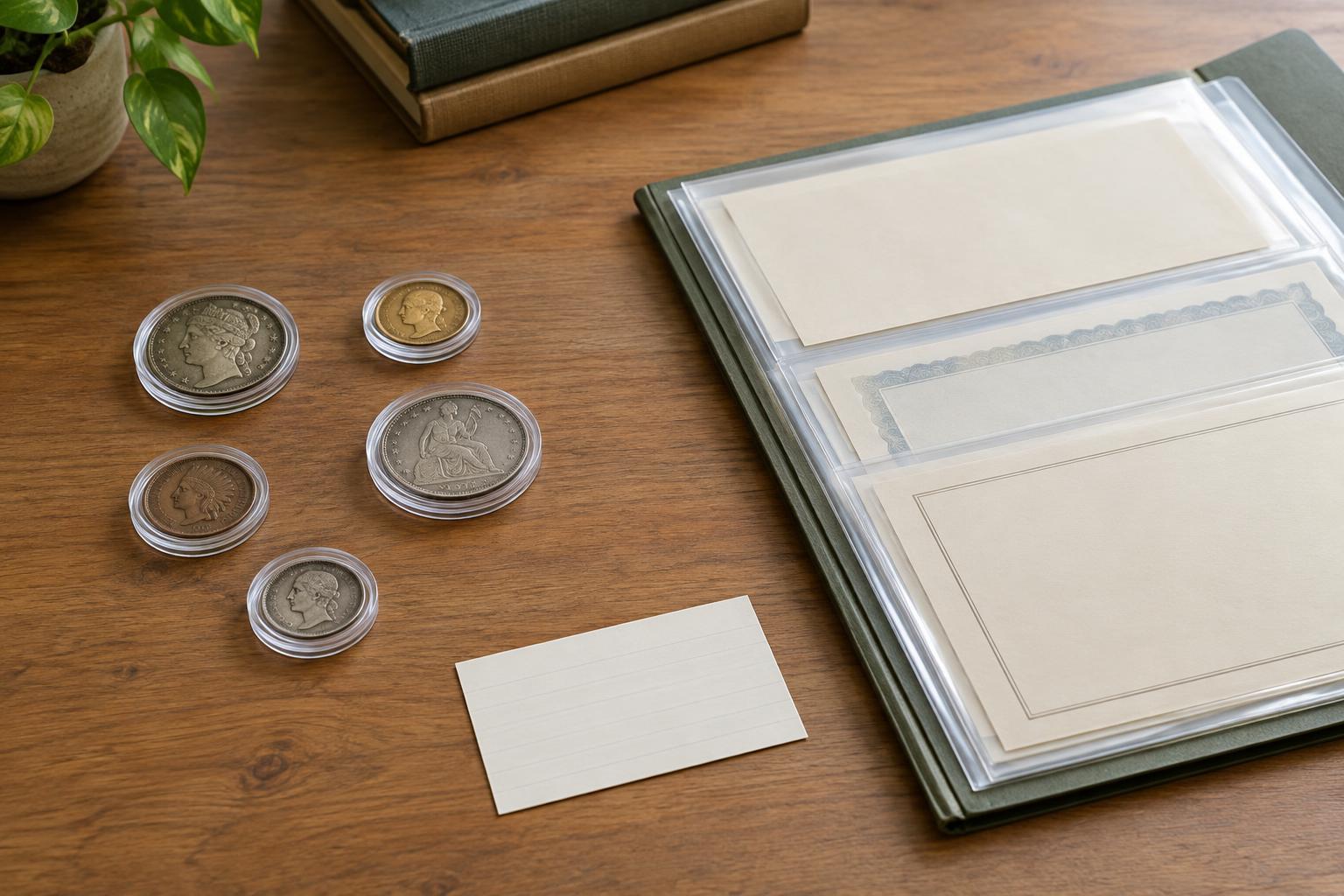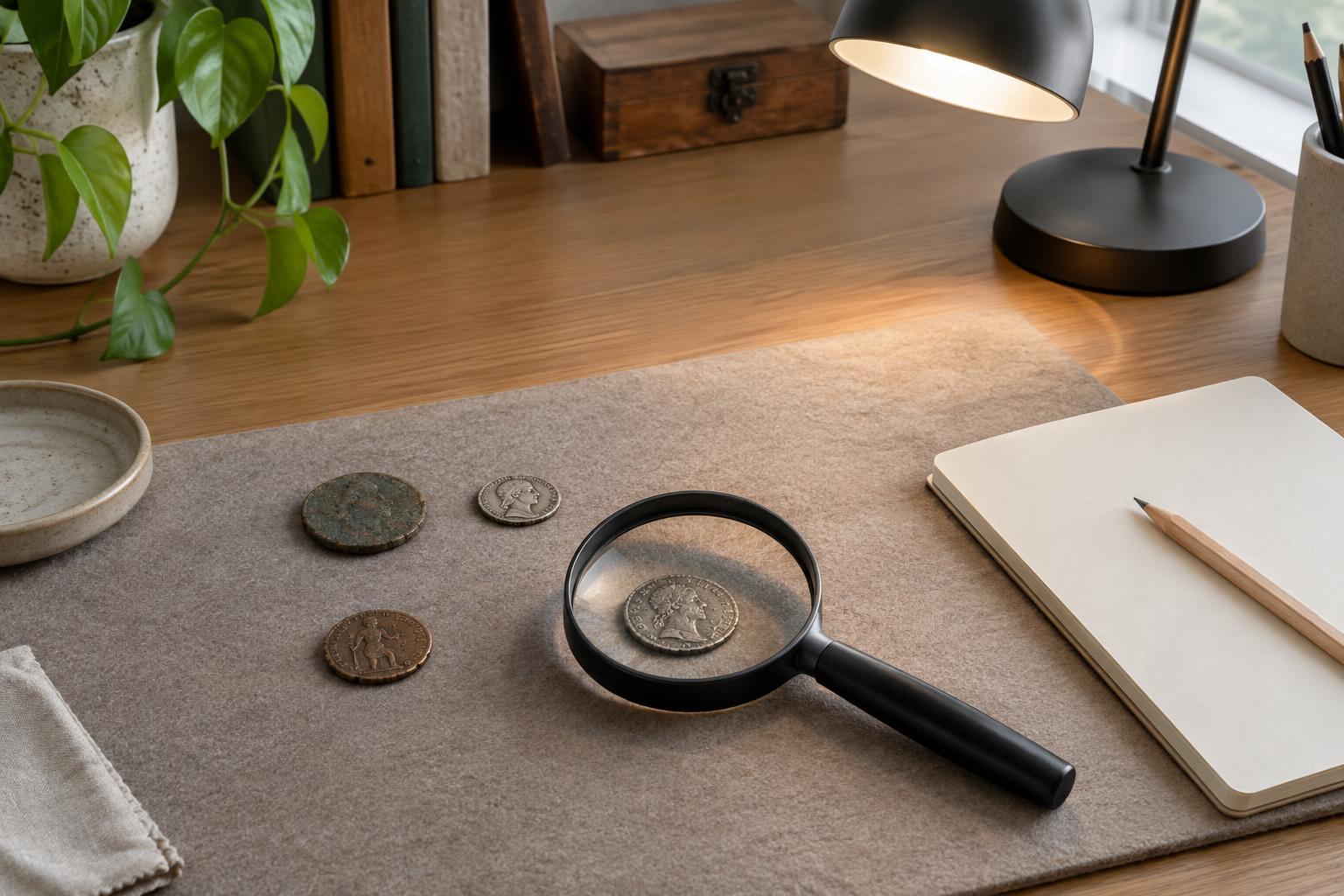
Start with a clear, stable surface
A coin-viewing station can be as simple as a cleared desk that you can use without rushing. Move drinks, food and loose objects out of the way. Choose a place where a coin is unlikely to roll onto the floor, and make room for the coin, its holder, a light and any notes you plan to take.
Put a clean, soft, lint-free surface beneath the area where you will handle coins. A pad can cushion an accidental drop, but it should not shed fibers or have a rough texture that might rub against a coin. Handle an unprotected coin by its edge when practical, with clean, dry hands. If it is already in a suitable holder, you can often inspect it without removing it. Resist the temptation to wipe away a fingerprint or spot: rubbing can leave marks that are harder to overlook than the original blemish.
Use light you can move
Good lighting is more useful than simply bright lighting. A movable desk lamp lets you change the angle of illumination while keeping the coin in place. Start with an even light that makes the whole design visible, then tilt the coin or reposition the lamp to see how light travels across its surface. This can help you distinguish raised design details from scratches, patches of wear or reflections on a holder.
Avoid relying on one dramatic angle. A shiny area can look dark when it reflects light away from you, while a mark may become conspicuous only after you turn the coin. Check the obverse, reverse and edge under more than one angle before describing what you see. If you are arranging controllable lighting in a shared workspace, Home Automation · IFDR Tech Explained offers further browsing about home lighting setups; a basic movable lamp is enough for this task.
Magnify with a question in mind
Your unaided view is a useful starting point. Look first for the date, denomination, main design and overall condition. Then use a modest hand magnifier when you have a specific question: Is that a mintmark? Does the edge have lettering? Is a feature part of the design or a mark on the surface?
Higher magnification is not always more helpful. It shows a smaller area, can make ordinary contact marks seem unusually prominent and may be difficult to hold steady. A magnifier with a comfortable working distance and clear focus is often easier to use than one chosen solely for its power. Keep its rim and lens from touching the coin. When viewing a coin through a holder, remember that scratches on the plastic may not be on the coin itself.
Follow the same inspection order each time
A repeatable routine helps you notice what you know and what remains uncertain. Examine the full obverse and reverse first. Read the inscriptions, noting any letters you cannot make out rather than guessing. Check the edge for a plain surface, grooves or lettering, and look for areas that differ from the rest of the coin. If you are comparing it with a description or image, match several features instead of relying on one familiar-looking portrait.
Write observations separately from interpretations. For example, “small raised mark beside the date” records something you can inspect again; “rare variety” is a conclusion that needs more checking. You can also note whether a feature is visible without magnification, appears only at a particular light angle or may be on the holder. This makes your notes more useful when you return to the coin later.
Keep a useful record without overcomplicating it
A brief record might include an identification, visible inscriptions, distinguishing features and questions to investigate. If you take photographs, capture both sides and, when useful, the edge. Use a steady camera position and consistent light so that differences between pictures do not come merely from the setup. Label files in a way you will understand later, and avoid using a photograph alone to make a firm judgment about subtle surface details.
Digital records need ordinary care, too. If your notes include where a collection is kept, consider who can access them; Cybersecurity Basics · IFDR Tech Explained is an option for further browsing about basic digital security. If you are deciding how to store and back up coin photographs, Computer Hardware · IFDR Tech Explained offers broader browsing on computer hardware. Neither is necessary for inspecting a coin today. The best station is one you can set up reliably, use patiently and leave clean for the next coin.