What counts as original mint packaging?
Original mint packaging is the material in which a coin or set was issued. Depending on the product, it might include a sealed holder, a plastic capsule, a display case, a paper envelope, a cardboard box or a certificate. These pieces serve different purposes. A capsule may keep fingers off a coin, while an outer box mainly holds the presentation materials together.
Keeping everything intact can make a set easier to identify and enjoy as issued. It can also help a future collector understand which coins and accessories belong together. That does not mean every piece of packaging is essential or that a coin without its box is necessarily damaged. The first step is to identify what you have before deciding whether to change its storage.
Reasons to leave the packaging intact
If a coin is secure and its packaging is clean, dry and stable, leaving it alone is often the simplest choice. Opening a holder creates another opportunity to touch the coin or expose it to dust. Proof and other specially finished coins can show fingerprints and fine marks readily, so avoiding unnecessary handling is especially useful.
Original packaging may also be part of how a collector understands a coin. An intact set keeps its contents together, and an accompanying certificate or labeled envelope may provide identifying details. Some collectors prefer complete presentations, although preferences and prices vary. Keep any paperwork with the set even if you store it separately from the coin for protection.
When the packaging deserves a closer look
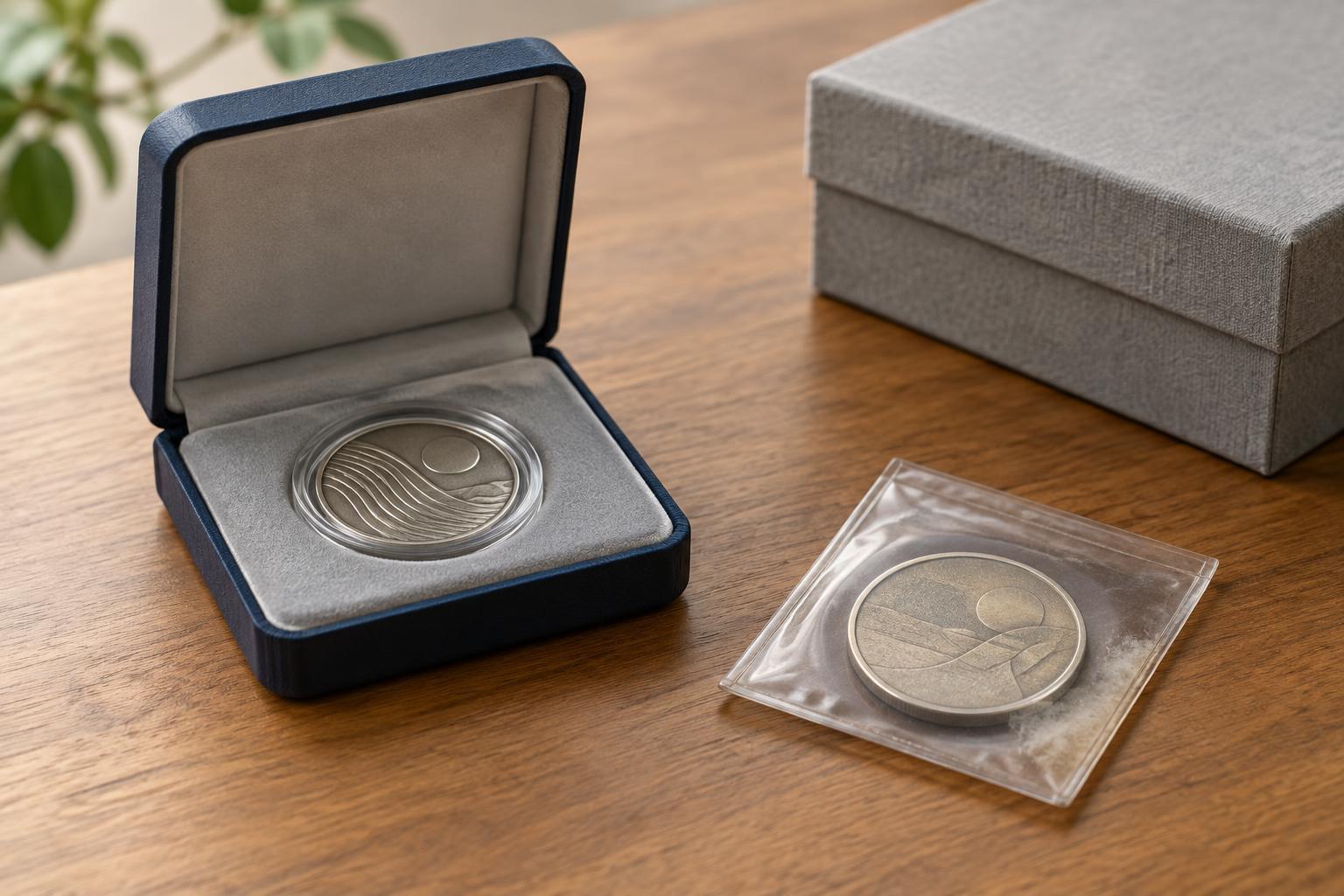
Original does not always mean ideal for long-term storage. A cracked capsule may no longer keep out dust. A loose coin can rub against a holder. Paper and cardboard can deteriorate, particularly in damp conditions, and soft, flexible plastic of uncertain composition warrants caution. Some plastics can release substances that leave residue or contribute to surface problems.
Inspect the packaging without opening it first. Look for cloudiness, sticky film, unusual spots, moisture, a strong chemical smell or visible damage that lets the coin move. Not every change in a holder means the coin itself is affected. If you cannot tell whether a mark is on the plastic or the coin, avoid rubbing either surface. A collector familiar with the type of coin or a reputable conservation specialist may be able to help you assess a concerning case.
Older envelopes and boxes may have historical interest even when they are no longer suitable as the coin’s direct container. You can preserve them separately while placing the coin in a more protective holder, if removal is practical and necessary. Before doing so, photograph the original arrangement and record any identifying information.
How to make a careful storage decision
Consider the coin, its holder and your reason for keeping it. Is the coin stable inside a sound capsule? Is it sealed in a set you want to retain intact? Is the packaging putting pressure on the coin or showing signs of deterioration? There is no single rule for every issue. An undamaged modern presentation case may need little attention, while an older coin in a questionable soft sleeve may call for a change.
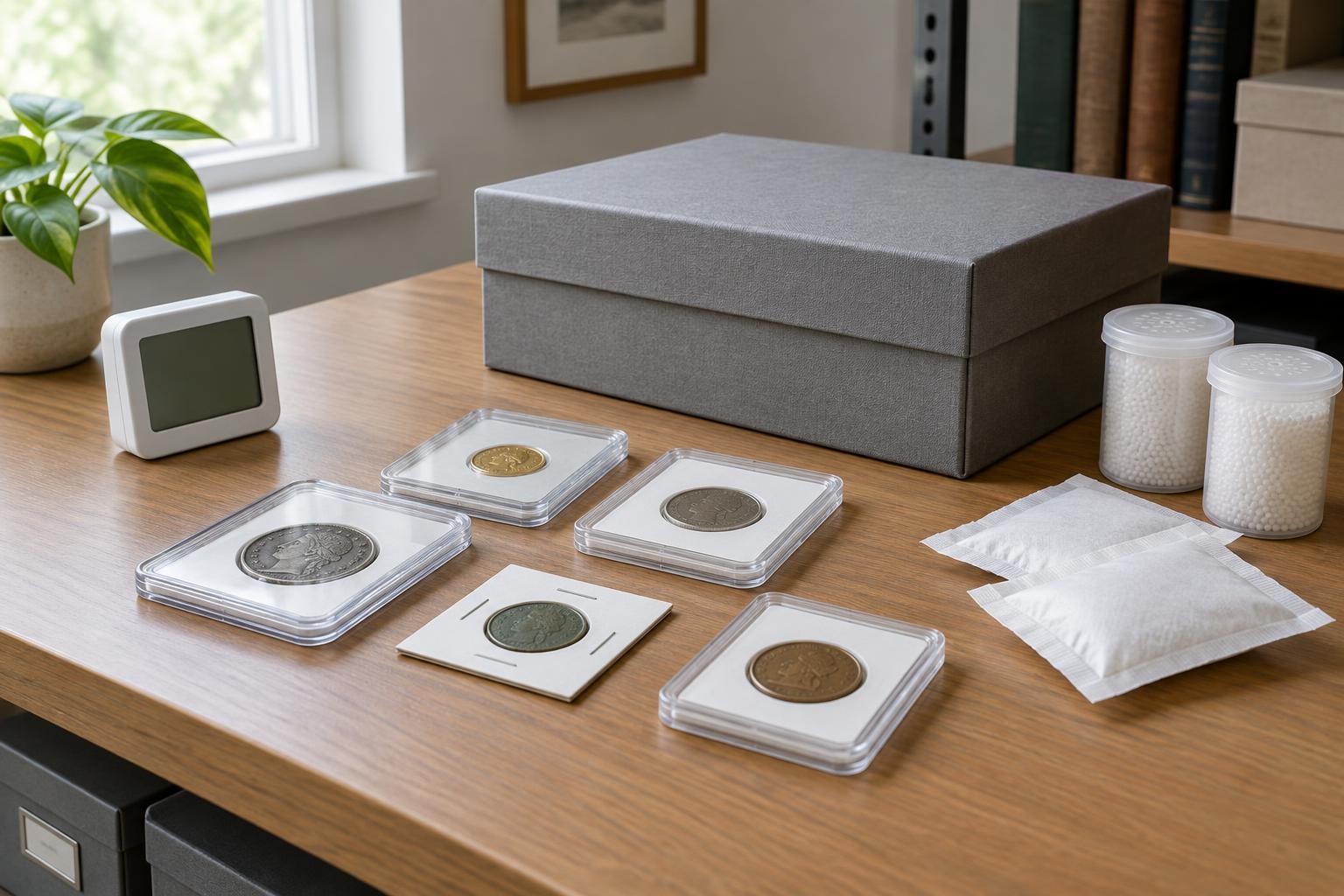
If you decide to rehouse a coin, prepare an appropriate inert holder before opening the original package. Work over a clean, soft surface, handle the coin by its edge and avoid touching its faces. Do not clean or polish it to make it look better in the new holder; cleaning can alter the surface. If a coin appears stuck to its packaging or removing it risks scratches, stop rather than forcing it.
Protect the coin and keep its context
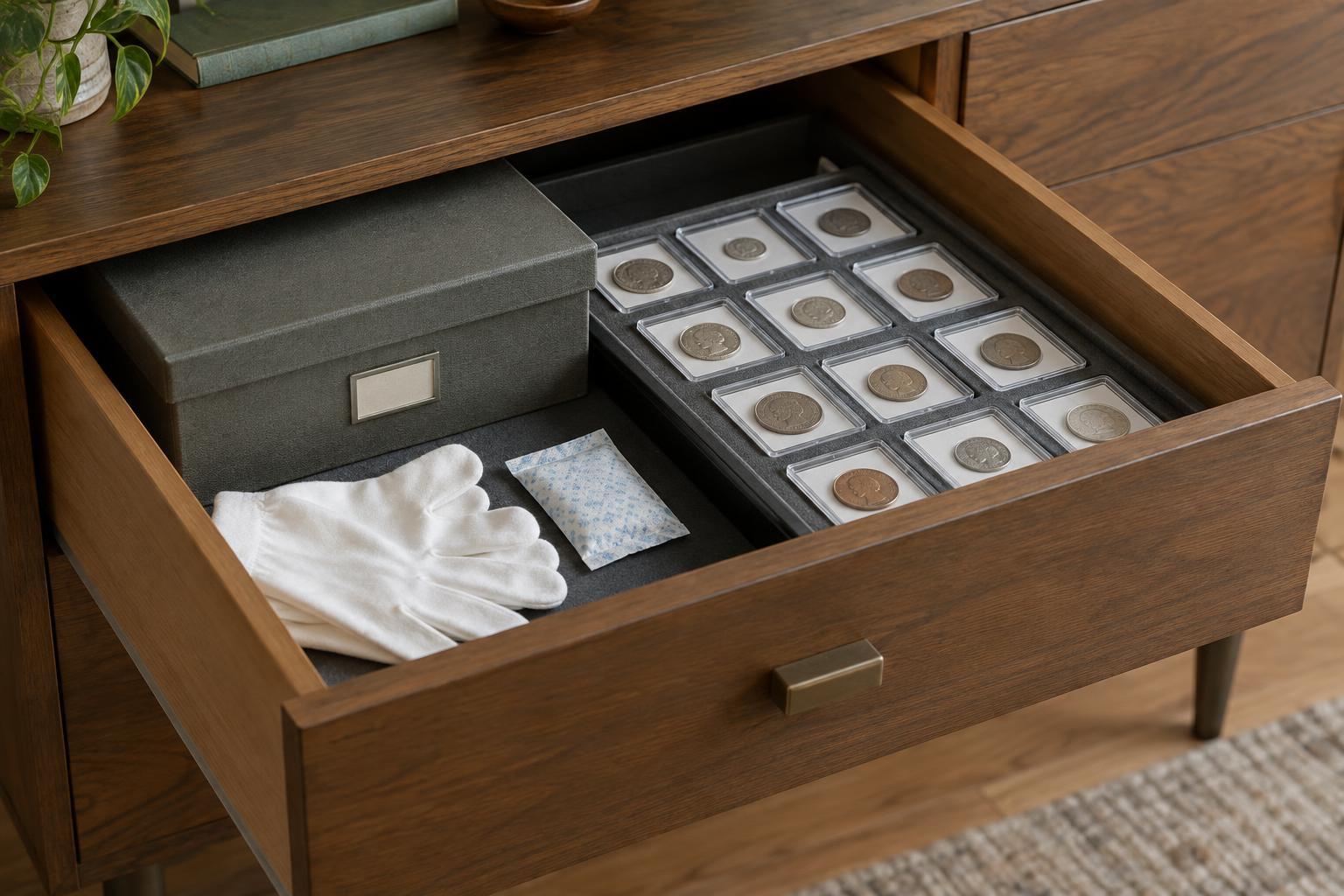
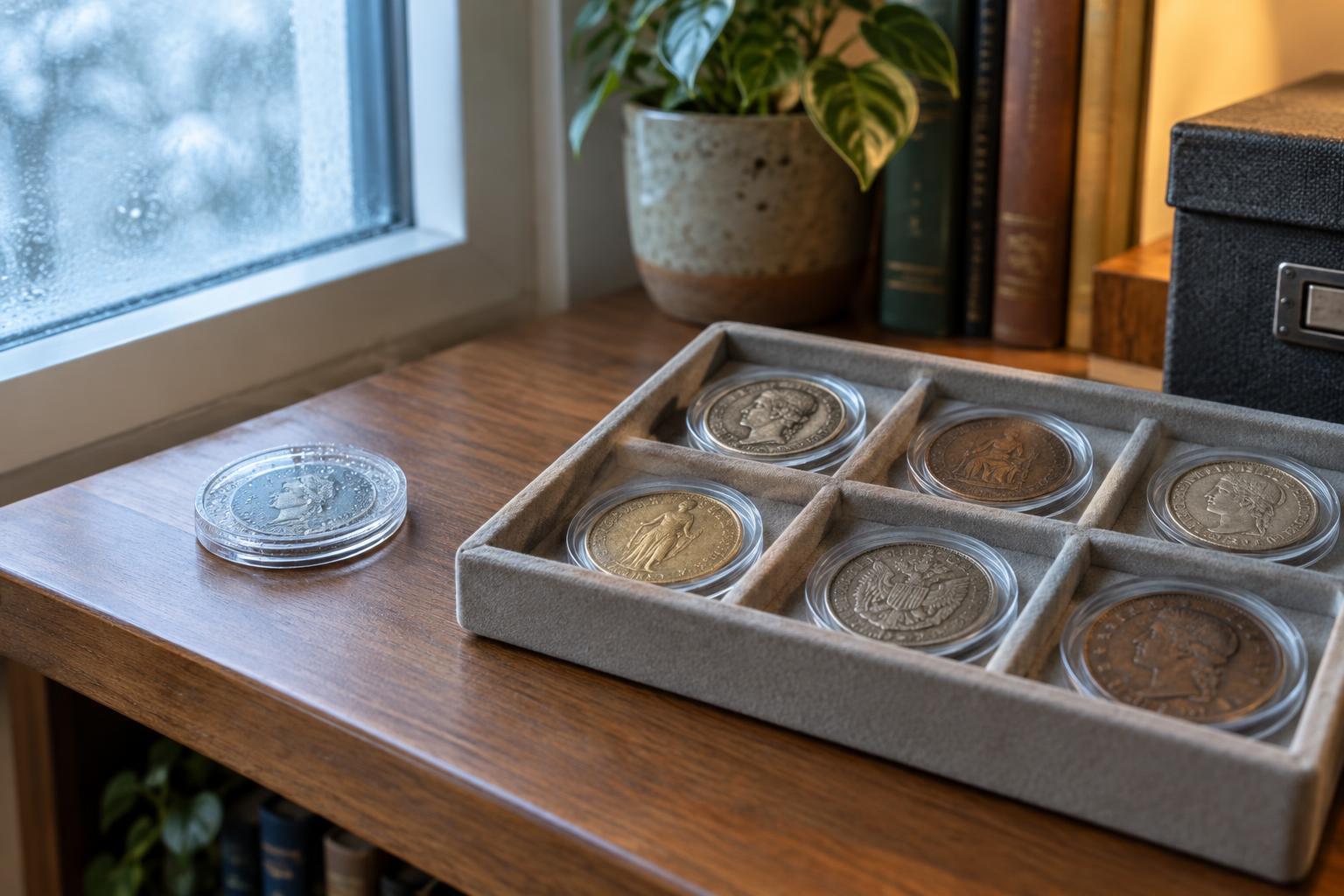
Whether you retain the mint packaging or change the coin’s holder, store the collection in a reasonably stable, dry location away from water, heat and direct sunlight. Avoid placing coins where condensation is likely. Check them occasionally for changes in the holder or the coin’s visible surfaces, but resist repeated opening just to inspect them.
Keep labels, certificates and original boxes organized so they cannot be confused with those from another set. A simple inventory noting what came with each coin can be more useful than relying on memory. If you replace a holder, retain the original packaging when feasible and label it clearly. That approach gives the coin appropriate care while preserving the story of how it was issued.