A silver coin with a long history
The denarius is one of the best-known coins of ancient Rome. Introduced during the Roman Republic in the late third century BCE, it became an important silver denomination and remained familiar through much of the Imperial period. Its long life makes it useful for studying Roman history, but it also creates a trap for beginners: a denarius from one century need not contain the same amount of silver as one from another.
Two measurements help explain the difference. Weight tells us how heavy a coin is; fineness describes the proportion of its metal that is silver. A lighter coin can contain less silver even if its fineness stays high. A coin of similar weight can also contain less silver if more base metal has been mixed into it. Collectors often call a reduction in precious-metal content “debasement,” though that word alone does not explain why a particular change occurred.
From the Republic to the early Empire
Early denarii were made of high-purity silver and weighed roughly four grams or more. Roman authorities changed coin standards over time, so there was no single unchanging Republican denarius. Individual surviving coins also vary: ancient production was not perfectly uniform, and centuries of circulation can remove metal from a coin’s surface.
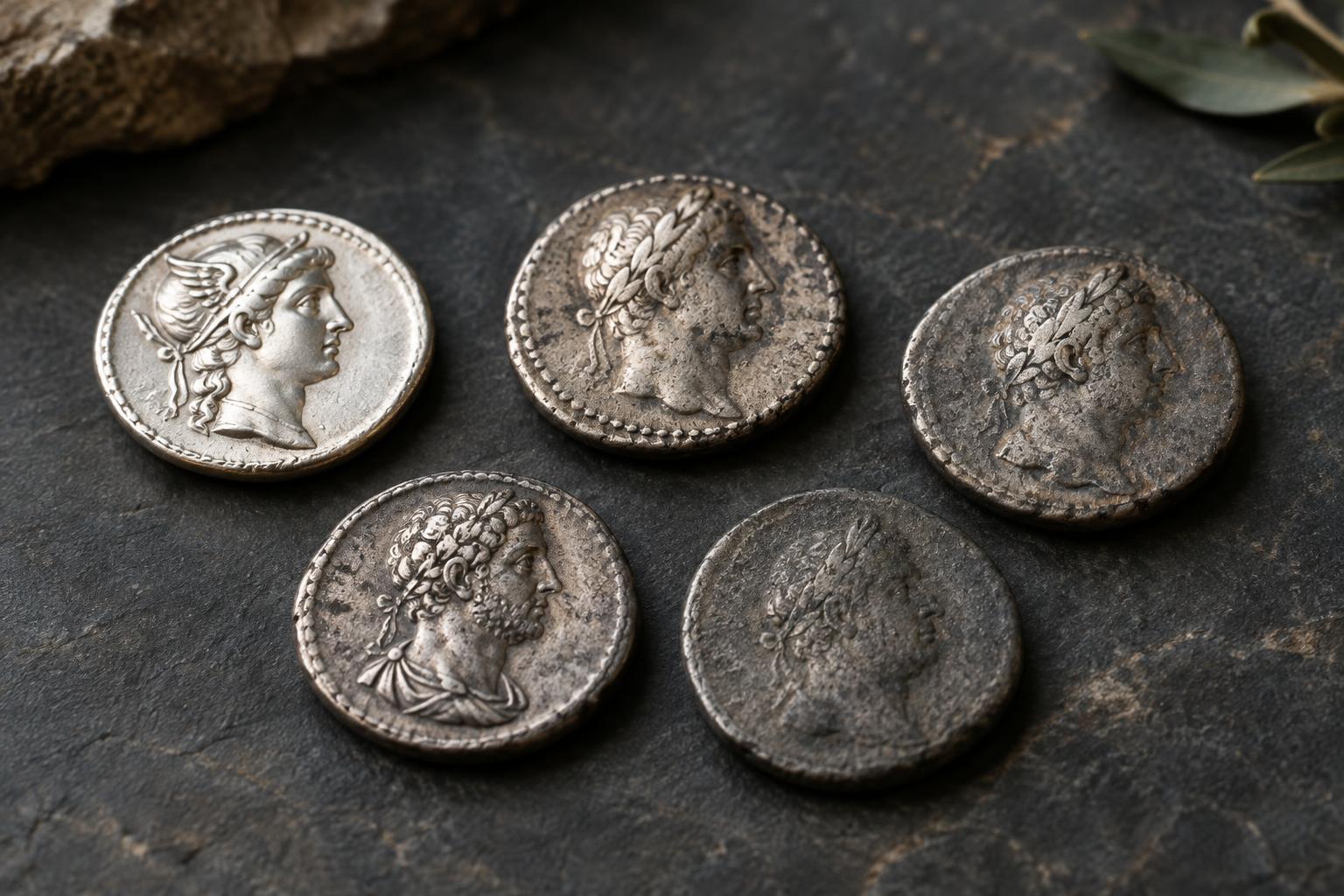
In the early Empire, denarii generally remained recognizably silver coins, but their typical weight was lower than that of the earliest issues. For someone arranging a collection by period, this is a useful reminder to compare coins within an appropriate date range rather than against one ideal weight for all denarii. A portrait, inscription or design may help place a coin in its historical context before any conclusions are drawn from its weight.
Imperial reductions were not a straight line
A notable change came under Nero in the first century CE, when the denarius was issued at a reduced weight and with a lower silver fineness than before. Later emperors made further changes. Across the second and third centuries, the silver content of denarii generally declined, although the pattern was uneven: standards could shift, and coins issued under one ruler or minting period should not automatically be treated as identical to those of another.
It is tempting to turn this history into a simple story in which each new emperor made the denarius worse. That misses important distinctions between weight, fineness and the coins people actually used. Changes in minting policy took place alongside changing demands on the Roman state, but the appearance of a coin cannot, by itself, establish a specific reason for a change. A careful description says what changed in the coin before trying to explain why.
The third century and a changing coinage
In the early third century, Rome introduced the antoninianus, a coin commonly understood as carrying a value of two denarii while initially containing less than twice the silver of a denarius. It did not replace every denarius at once. Over time, however, the denarius became less prominent as a regularly issued silver coin, while the antoninianus underwent substantial changes of its own. Later examples of that denomination could have very low silver content despite a silvery-looking surface.
This distinction matters when reading about “Roman silver coins.” A third-century coin with a radiate-crowned portrait may be an antoninianus rather than a denarius. Calling both coins denarii would obscure their different histories. By the later third century, the familiar denarius was no longer the central silver coin it had once been, and subsequent reforms introduced different coin types and standards.
What a collector can learn from an individual coin
If you are examining a denarius, start with its identification: ruler or issuing authority, approximate date, and type. Then consider weight and visible condition. Heavy wear, chips, damage and missing portions can all lower a surviving coin’s weight without telling you what its original metal standard was. Surface color is an unreliable test of purity; cleaning, corrosion and other surface changes can alter how ancient metal looks.
Published references may give typical weights and estimated fineness for an issue or period, but an individual coin is not a perfect sample of that average. Precise metal composition requires suitable testing, and even a measurement should be interpreted alongside an accurate attribution and the coin’s condition. For a beginner, the most rewarding approach is often to compare well-identified examples from different periods and ask two separate questions: how much did the coin weigh when made, and what portion of that weight was silver? Together, those questions reveal why the denarius is more than a single, fixed silver standard.