A familiar shape with a long history
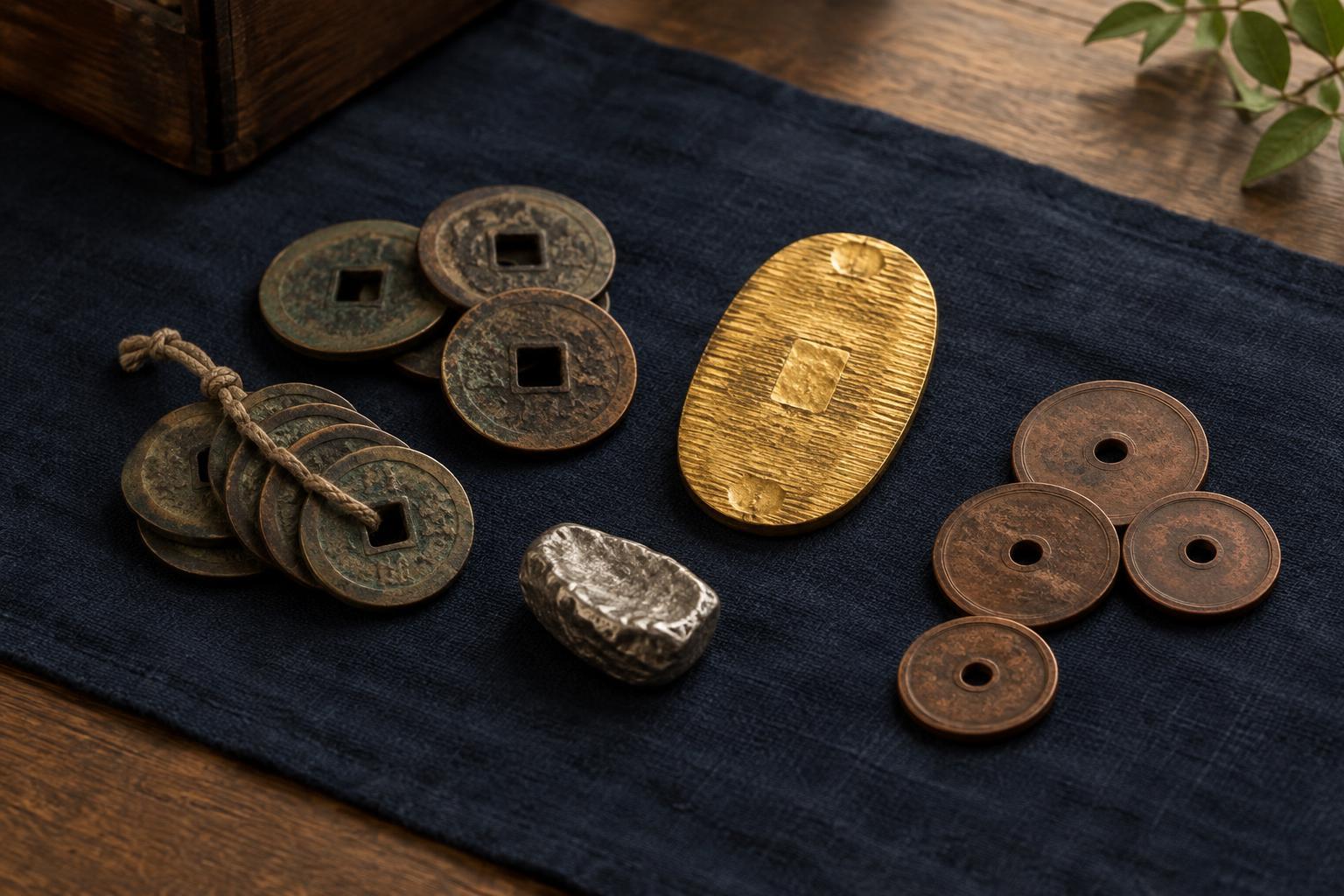
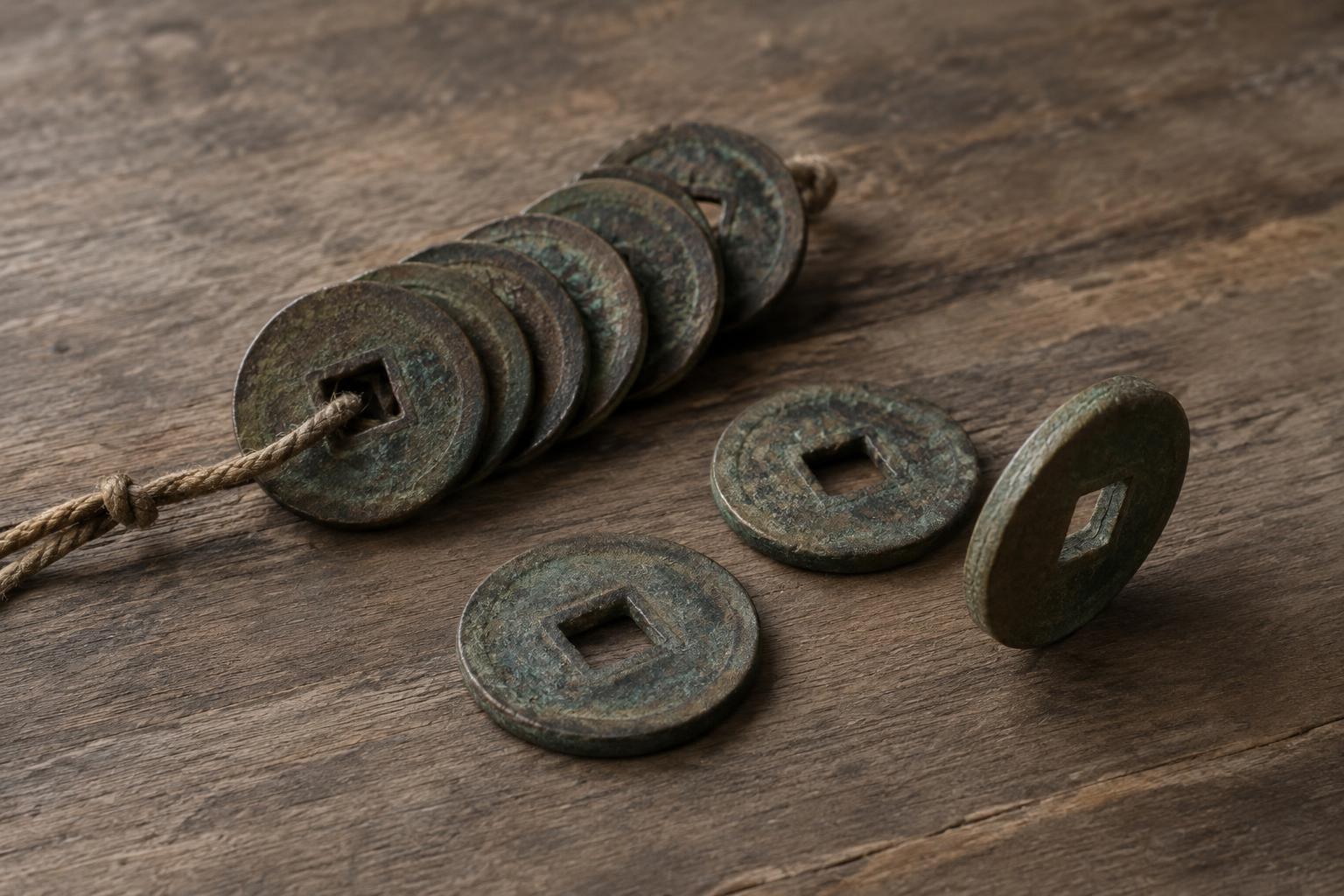
Traditional Chinese cash coins are easy to recognize: they are usually round, with a square opening at the center and characters arranged around it. Versions of this design were made across many centuries. Their inscriptions, metals, sizes, and workmanship changed, but the basic outline remained remarkably familiar.
The design developed after earlier forms of Chinese money, including coins shaped like tools. Round coins with central holes became prominent during the Warring States period, and the round coin with a square hole became a lasting model under the Qin and later dynasties. There was no single unchanging specification for every coin called “cash,” so it is better to think of the square hole as a long-lived convention than as a feature with one fixed explanation.
How the hole helped in making coins
Unlike many modern coins, traditional cash coins were generally cast rather than struck. Molten metal was poured into molds that formed multiple coins. Once the metal cooled, workers separated the coins and removed unwanted metal left by the casting process. Finishing mattered: rough projections or uneven edges could make coins awkward to handle and string.
A square opening offered a useful grip during this work. Coins could be placed on a square rod that passed through their centers. Because the rod’s shape resisted turning, workers could hold a group of coins more securely while filing their outer edges. A round hole on a round rod would not resist rotation in quite the same way. This practical advantage is one of the clearest explanations for the enduring shape of the opening.
Casting methods and finishing practices varied by place and period. The square hole should not be treated as proof that every individual coin was made or filed in precisely the same manner.
Useful for carrying, though not uniquely square
The central opening also made cash coins convenient to carry and count. People could thread a cord through several coins to form a string rather than handle each small piece separately. Strings were useful in everyday exchange and storage, although the number of coins in a string and how it was reckoned could vary.
For stringing, the presence of a hole mattered more than its exact shape: a round opening could have held a cord too. This is why “coins were strung together” explains the central hole, but does not fully explain why that hole was square. The square form makes more sense when considered alongside casting, finishing, and the strength of an established design tradition.
What about round heaven and square earth?
A common interpretation links the coin’s round exterior and square center to the traditional idea of a round heaven and square earth. That reading can help explain why the shape has held symbolic appeal. It may also help explain why people continued to find meaning in a design that was already familiar.
Symbolism, however, is difficult to establish as the sole original reason for the hole. Practical and cultural explanations need not compete: a feature can be useful in a workshop and later acquire, or retain, symbolic meaning. When describing a cash coin, it is more accurate to present the heaven-and-earth connection as an interpretation than to state that it was the proven reason every square hole was made.
What the shape can tell a collector
The square hole is a starting point for examining a cash coin, not a reliable way to identify it on its own. Look at the characters around the opening, their reading order and style, the coin’s overall size, and the quality of its casting. Some pieces have additional marks on the reverse. These details can help narrow down a type, though similar-looking coins may have been issued in different periods or made outside China.
Check the hole and edges as part of the coin’s condition. They may show casting remnants, later wear, damage, or alterations; none of these should be judged from one feature alone. If you are beginning a collection, compare several clearly identified examples rather than expecting the square hole to tell the whole story. Its real interest lies in how one simple shape served manufacturing, handling, and tradition at the same time.