A national currency before there were national coins
In the years after independence, people in the United States did not rely on a single, familiar set of coins. Foreign coins circulated alongside various local issues and earlier coinages. Spanish silver coins were especially important in everyday commerce. The new federal government could define a monetary system, but putting enough coins into people’s hands was a separate challenge.
The dollar offered a practical starting point because it was already a recognizable unit of account. The question was how to turn that unit into a consistent series of federal coins. Those coins needed agreed-upon weights and metal content, a place to be made, and designs that represented the new republic. The first U.S. Mint was created to do that work.
What the Coinage Act of 1792 established
The Coinage Act of 1792 established the United States Mint and set out a decimal system based on the dollar, divided into 100 cents. It authorized denominations in copper, silver, and gold, ranging from the half cent to the ten-dollar eagle. The act also specified standards for the coins and provided for Mint officers and procedures. Passing a law, however, did not mean every authorized coin could be produced immediately.
The Mint was established in Philadelphia, then the nation’s capital. A building, equipment, metal, skilled workers, and workable designs were all needed before coin production could settle into a routine. Early federal coinage is best understood as a gradual beginning rather than a complete set of denominations arriving in a single year.
The first Mint gets to work
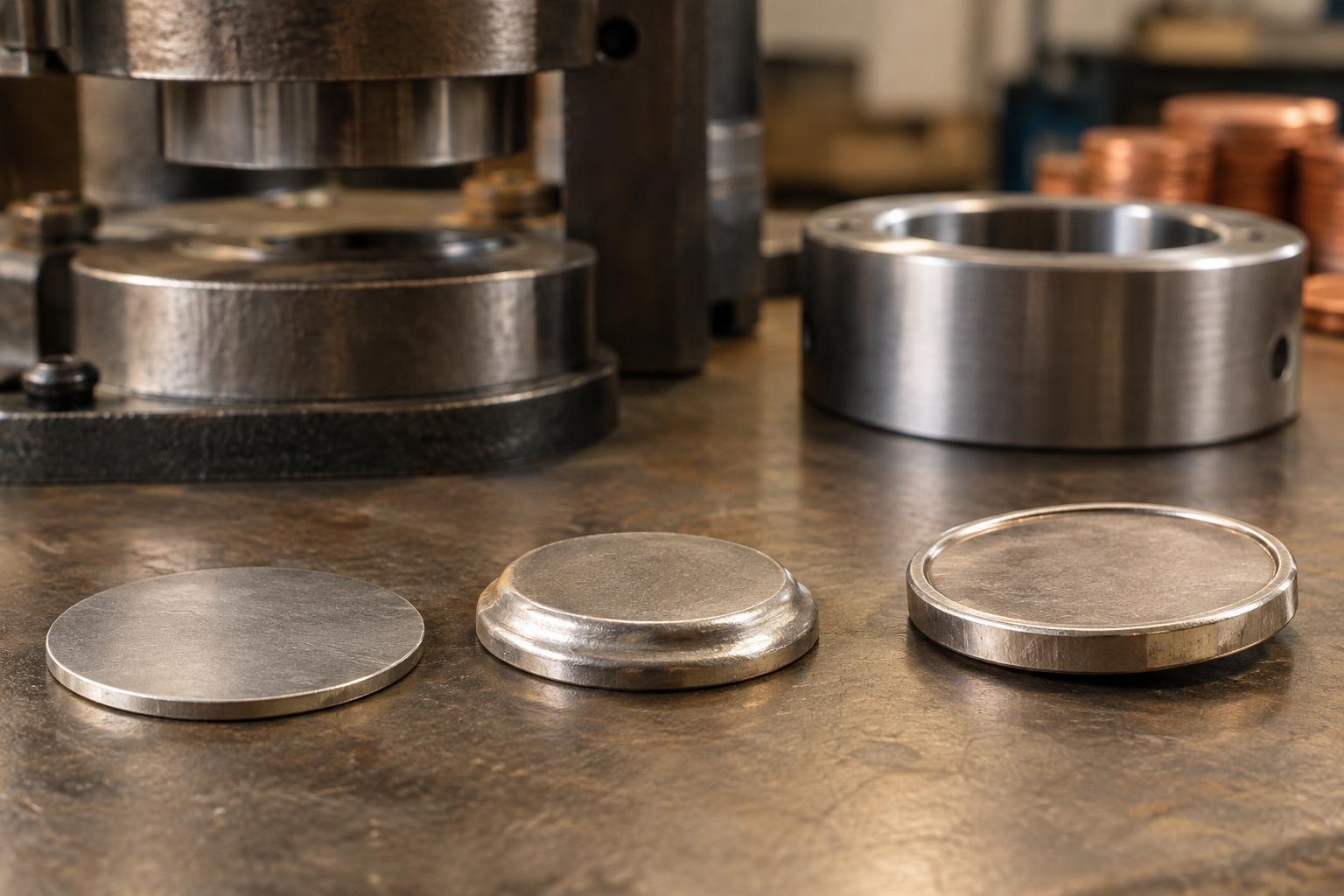
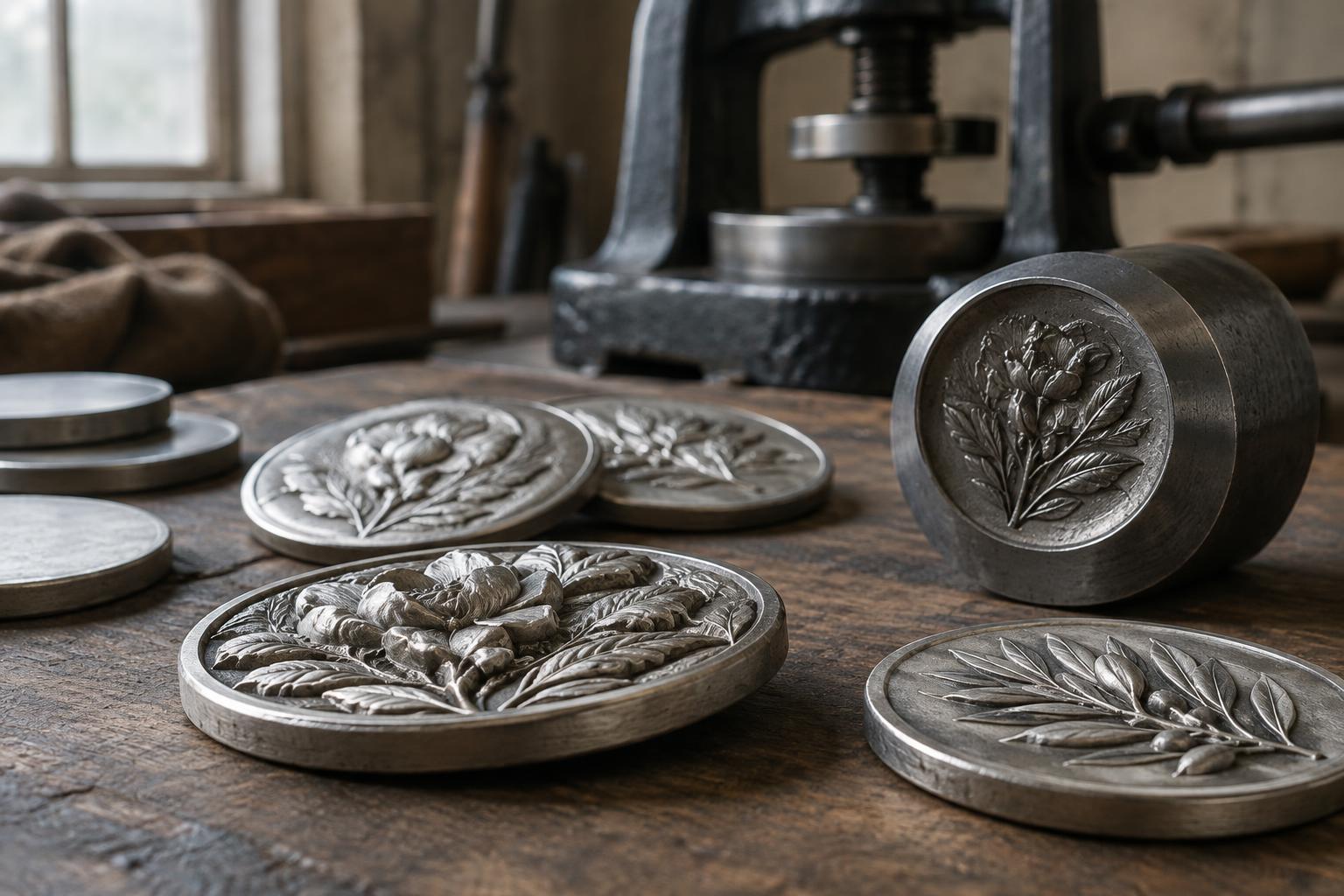
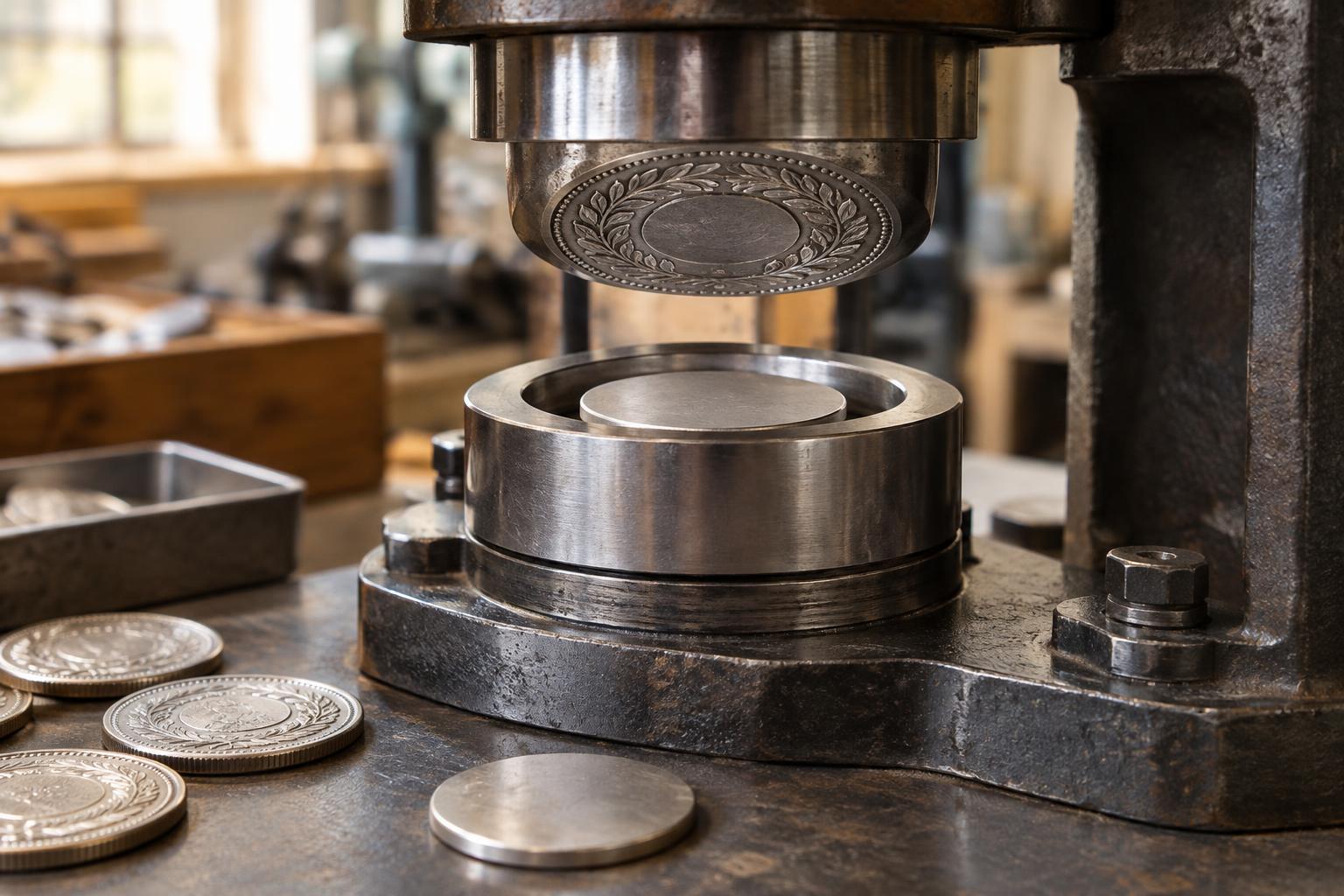
The first Mint operated in Philadelphia, where its workers prepared metal blanks, made dies, and struck coins with presses. Making a coin required more than pressing an image into metal. A blank had to be brought to the proper size and weight, and the dies had to impress a design clearly enough for the coin to be accepted and used. Changes in equipment, die preparation, and available metal could all affect how quickly coins were made.
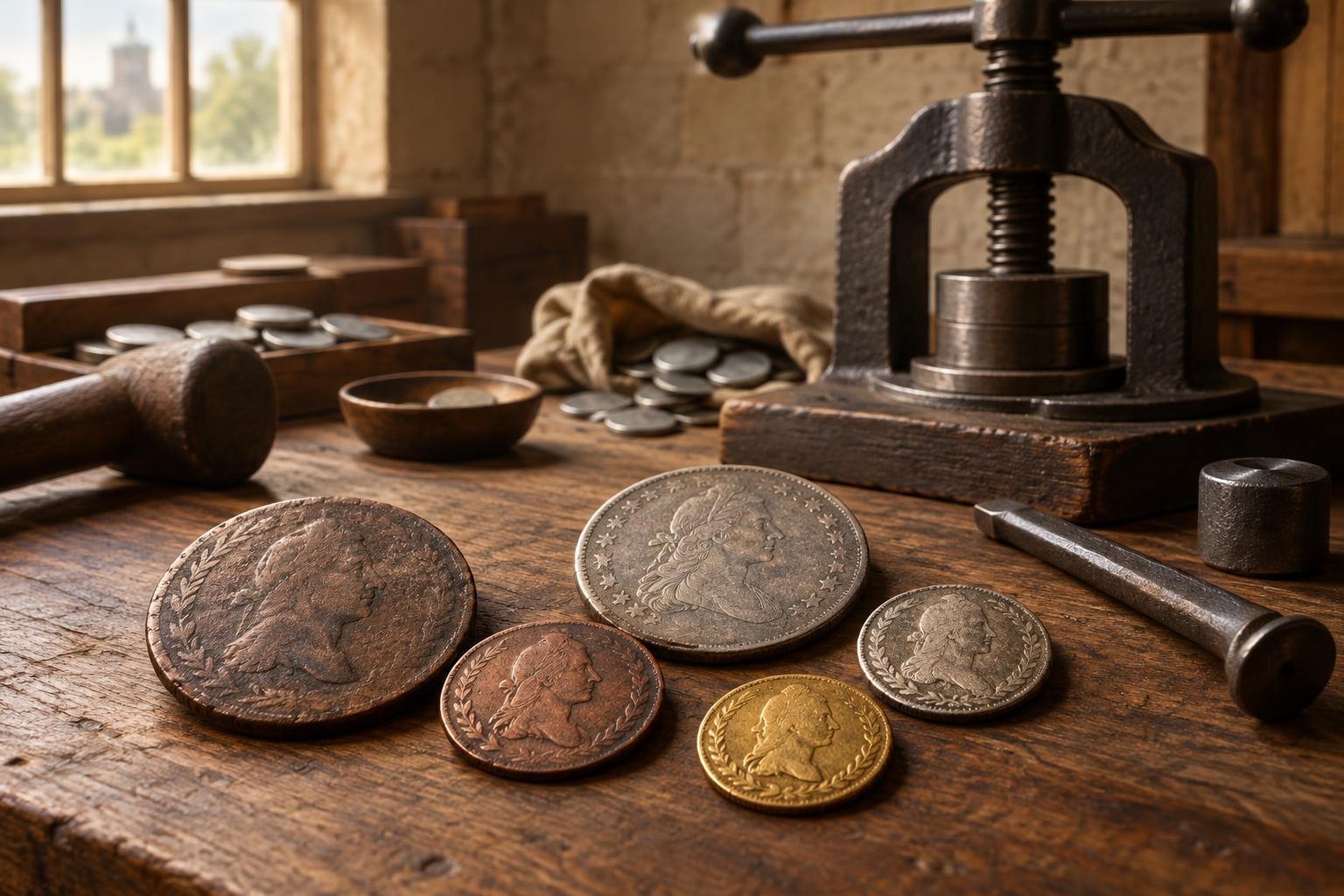
Copper cents and half cents entered federal production in 1793. Their designs changed noticeably over a short period: collectors recognize the Chain cent, Wreath cent, and Liberty Cap cent among the early cents. These changes make the coins useful historical objects, not just examples of small change. They show a Mint still working out how a national coin should look and how reliably it could be produced.
Silver and gold join the series
The story of the first federal silver coin has a complication. Half dismes dated 1792 were struck around the time the Mint was being established, but their exact place in the Mint’s earliest production history is discussed by numismatists. For a straightforward starting point, the copper issues of 1793 mark the beginning of regular production at the Philadelphia Mint. Silver dollars followed in 1794, and federal gold coins began appearing in 1795.
These dates do not mean the new coins instantly displaced the money already in circulation. Producing enough pieces in the right denominations took time, and people continued to use other familiar coins. The early Mint’s output was part of a transition: a federal system existed on paper, while its physical coins entered commerce bit by bit.
How to read an early federal coin
For a beginner, an early coin’s design is a good place to start. Look for the representation of Liberty, then turn the coin over to examine the reverse. Depending on the denomination and date, you may see a wreath or an eagle. Notice the denomination, lettering, and date as well. Early U.S. coins did not all follow one fixed visual formula; comparing several types makes that clear.
Condition, authenticity, and small design differences matter greatly to collectors, but they are not the only reasons to study these coins. An early cent can illustrate the practical problem of supplying small change. A 1794 dollar can show what the new silver coinage looked like. Together, the first federal issues document a government turning a monetary plan into objects people could hold, count, and spend.