Begin with the story, not a price list
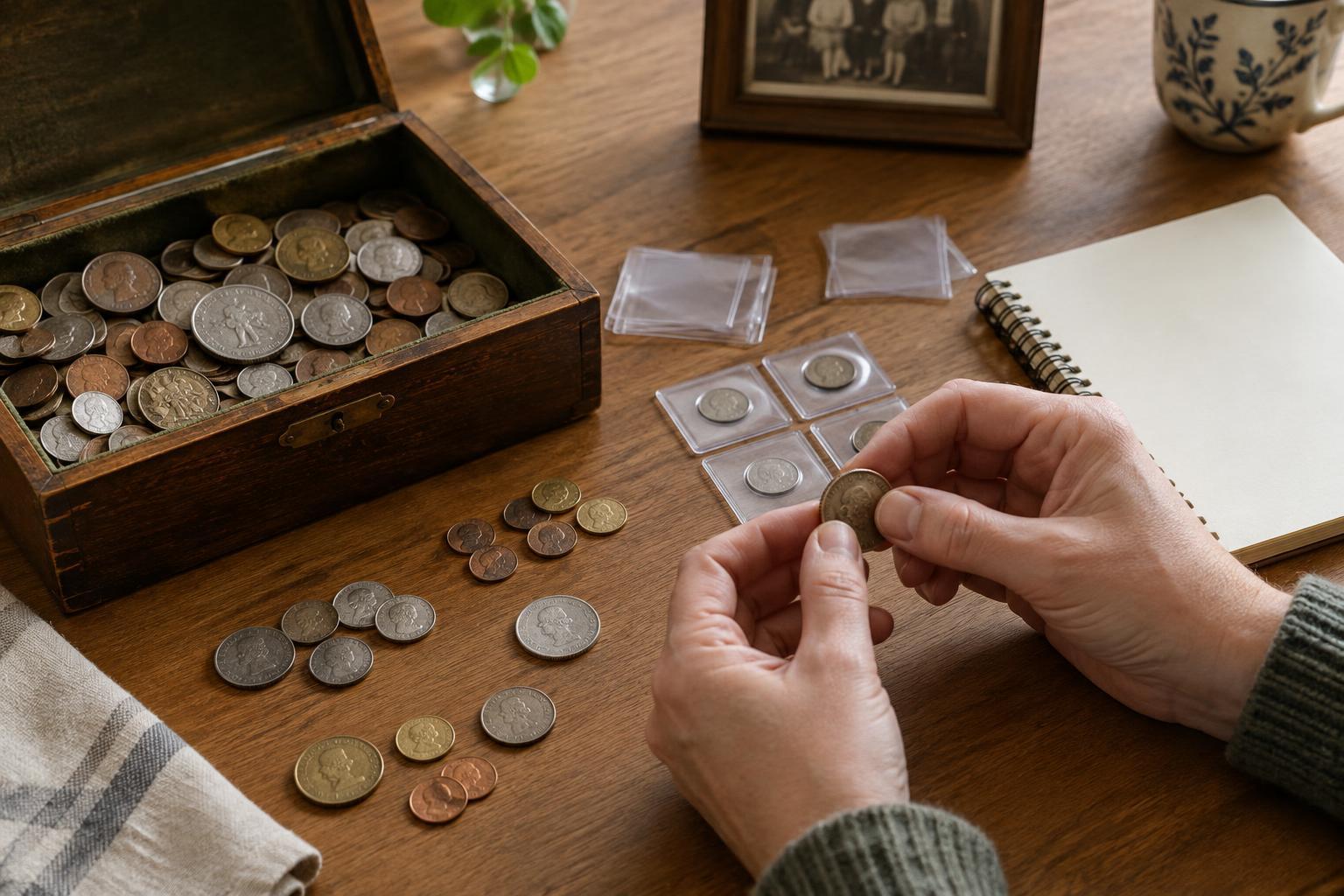
An inherited group of coins may contain carefully chosen pieces, pocket change, souvenirs, and duplicates all mixed together. Resist the urge to decide immediately which coins are important. The first useful question is how the assortment came together. A note on an envelope, a label on a holder, or a family member’s recollection may explain why otherwise ordinary coins were saved.
Keep coins with their original envelopes or labels while you examine them. Write down what each label says, even if you are unsure it is correct. Record who assembled the coins if known, along with any family stories you want to preserve. This context may not affect a coin’s market value, but it can give the collection meaning and suggest a direction for studying it.
Make a simple inventory
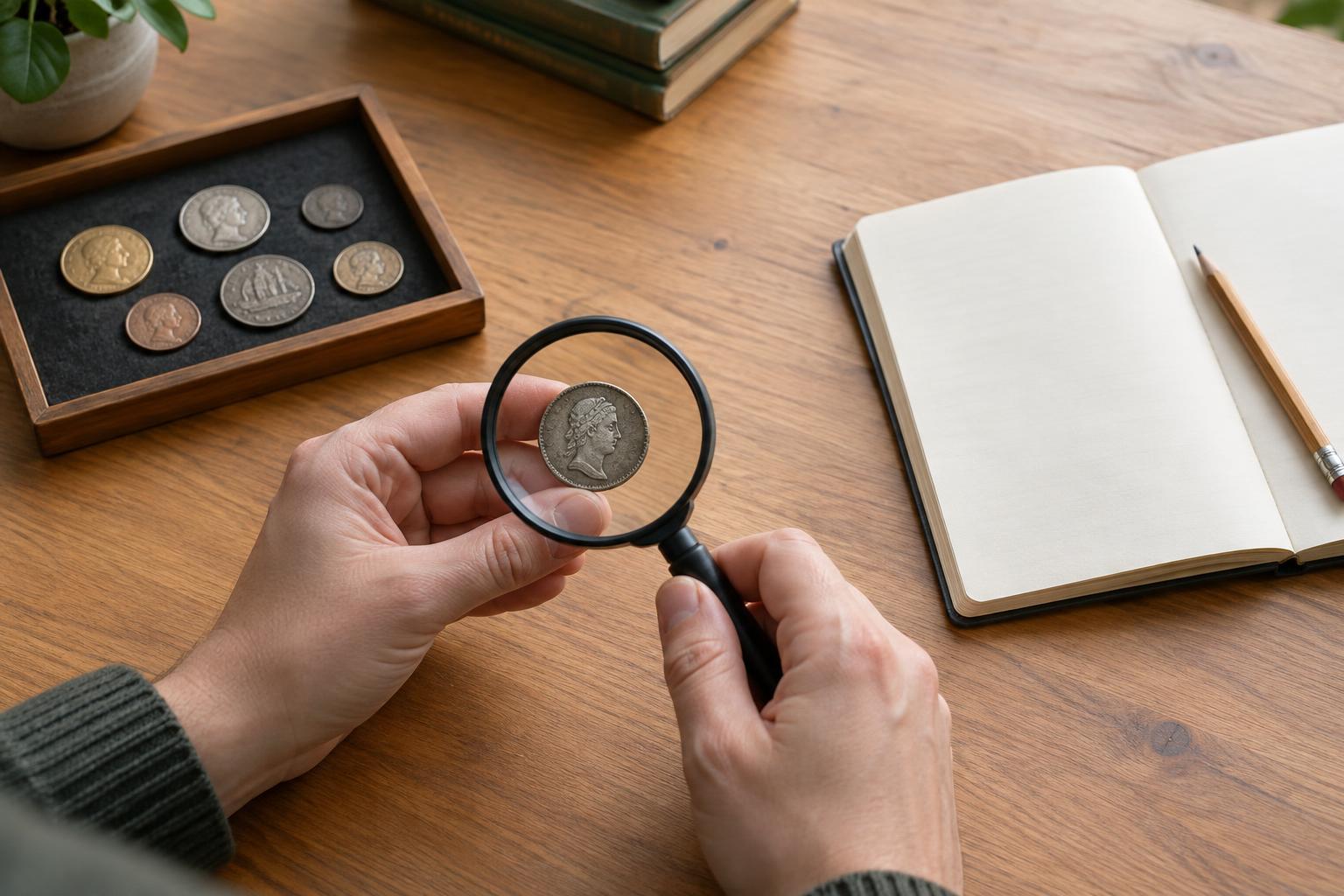
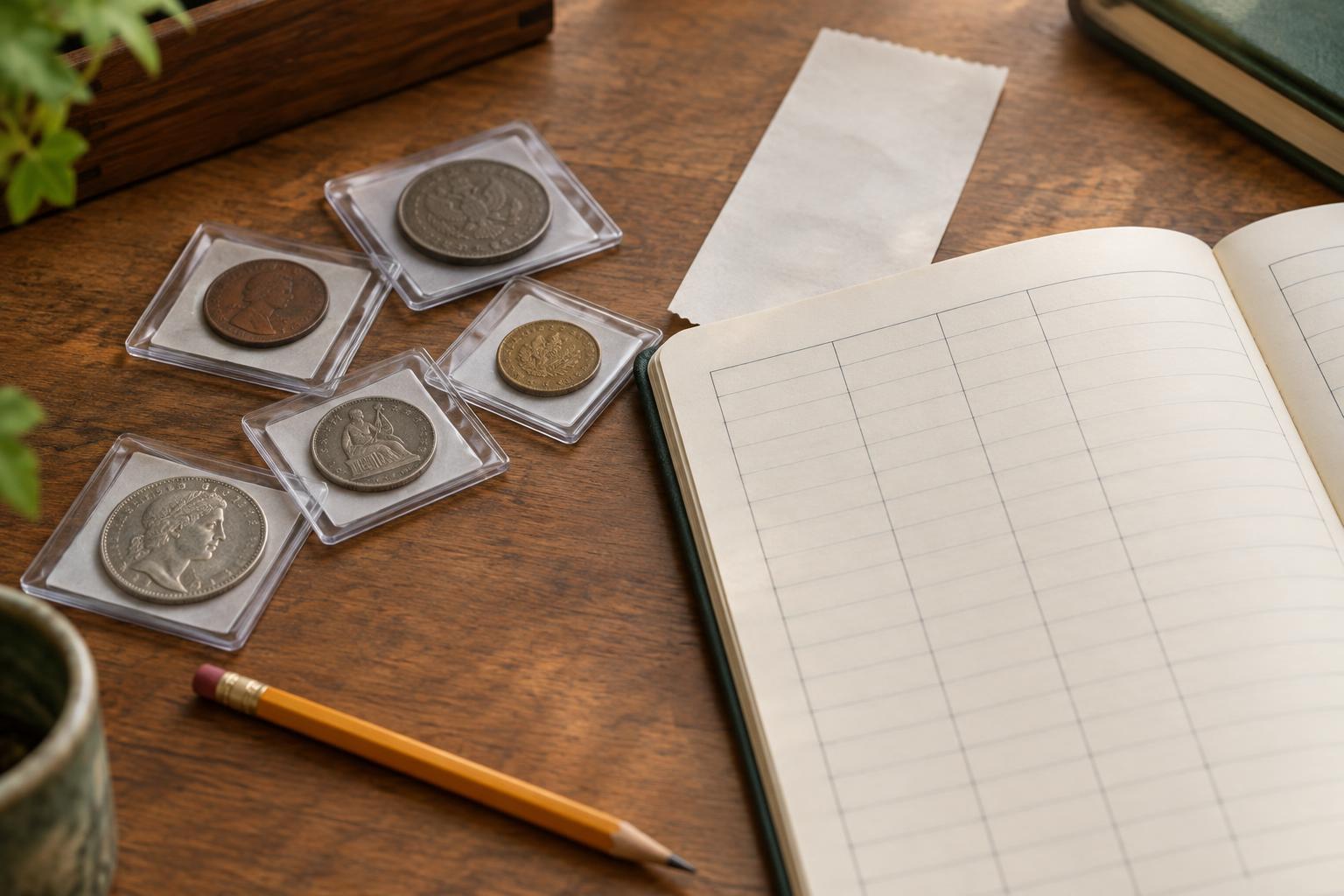
Work with a small group at a time on a clear, padded surface. Handle coins by their edges and avoid rubbing their faces. Give each coin or existing holder a temporary inventory number. For each entry, note the country or issuing authority, denomination, date, visible mint mark if any, and any text you can read. Add a brief description of the design and a note about wear, damage, or uncertainty. A spreadsheet is useful, but a notebook works just as well.
Photograph both sides of coins you cannot readily identify, keeping each image linked to its inventory number. Do not force a guess when a date or inscription is unclear; mark it as uncertain and return to it later. This record helps prevent repeated handling and makes it easier to spot patterns. It also separates what you can observe on the coin from what a handwritten label claims about it.
Sort for understanding, not just rarity
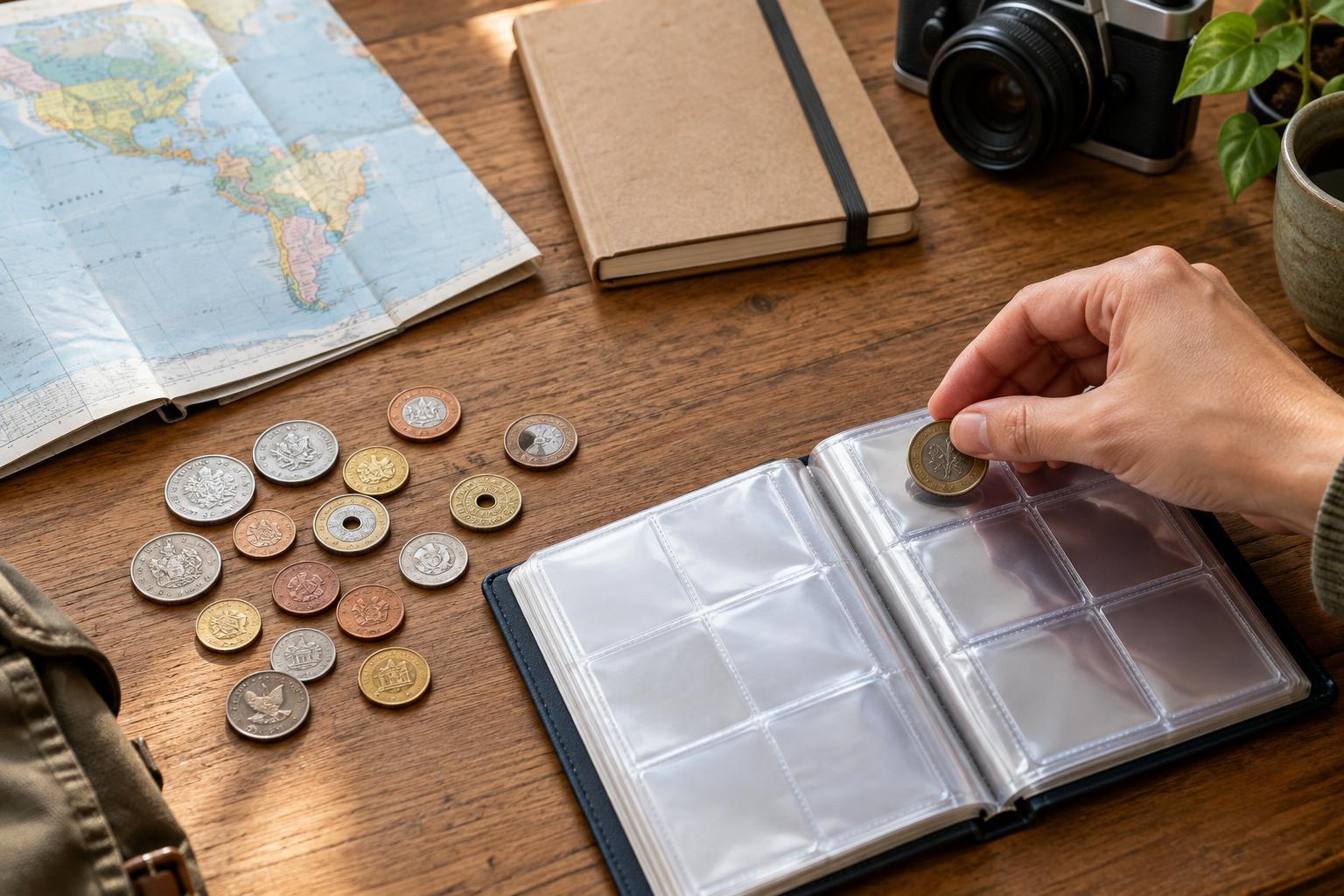
Begin with broad groups such as country, denomination, period, or the person’s original envelopes. Then look for smaller connections: a run of dates, several versions of one design, coins from places the family visited, or examples of different mint marks. Duplicates can be useful. Side-by-side examples may show differences in wear, design details, or production quality that are hard to notice in isolation.
Be cautious about treating age, unusual color, or a printed price on an old holder as proof of value. Identification, condition, demand, and possible varieties all matter, and prices can change. If a piece appears unusual or difficult to identify, set it aside for closer study rather than cleaning it or testing it with household products. Cleaning can permanently alter a coin’s surface and may remove details that help tell its story.
Protect the assortment while you learn
Good storage makes a long-term project easier. Keep coins in a reasonably stable, dry environment, away from damp basements, heat, and frequent temperature changes. Suitable coin holders made from inert materials can protect loose pieces from contact and abrasion. If you do not know what a soft plastic sleeve is made from, consider replacing it with a holder intended for coin storage; some plastics can cause surface problems over time.
Label new holders with inventory numbers rather than writing on the coins. Keep any original packaging nearby, especially when it carries useful information. If a coin seems fragile, has a loose surface deposit, or is housed in an unfamiliar sealed holder, leave it as found until you understand it better. Careful storage gives you time to research without making irreversible decisions.
Choose a project small enough to enjoy
Once the assortment is recorded, pick one question to guide your first collecting project. You might study the designs on one denomination, arrange coins from a particular country by date, or trace how mint marks differ within a short series. Choose a theme represented by several coins you already have. That gives you material to compare before you decide whether to add anything.
Set a practical scope: what belongs in the project, what you hope to learn, and how you will record new findings. A collection does not need to become complete to be worthwhile. You can keep the rest of the inheritance as a separate reference group and revisit it as your interests change. The result is more than a sorted box of coins: it is a collection with a documented starting point and a purpose you chose yourself.